

GoStudy
Author
Feb 24, 2026
Published
8 mins read
Read Time
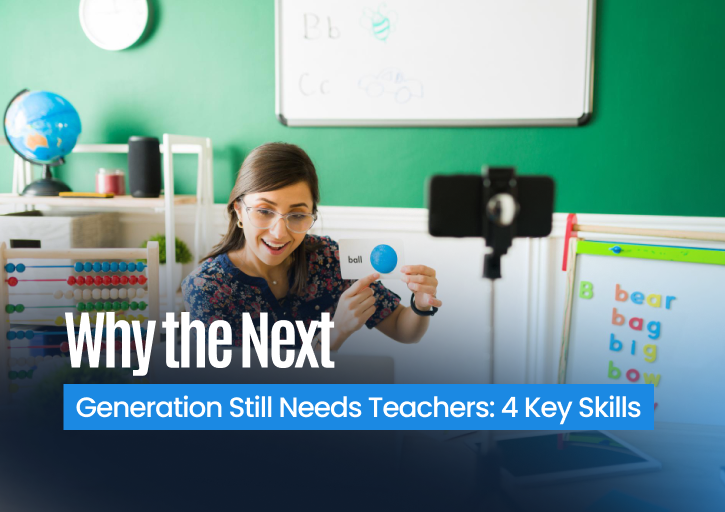
Are you thinking about why the next generation still needs teachers? Every few years, a new piece of technology comes out that makes people wonder: Will this finally make teachers obsolete? The first one was TV. Next came computers. After that, the web. AI and virtual learning tools are now the big things. The answer is always "no." The reason for this is not that technology isn't useful, but that great teachers do a lot more than just teach.
E-learning platforms, AI-powered teaching tools, and learning management systems are being used in schools all over Dubai, Abu Dhabi, and beyond as part of regular lessons. As a company, GoStudy.ae fully supports the use of these tools because they are truly useful.
But both data and real-life experience show that technology works best when it helps great teaching, not when it tries to take its place. The kids of the UAE of tomorrow need both modern technology and the people skills that can only be taught by a teacher.
This piece talks about four skills that teachers bring to the classroom that no one else does. It also talks about why these skills are still important in this day and age of online Tutoring.
In the last twenty years, the UAE has done a great deal to improve schooling. When it comes to investing in EdTech, the country is always one of the boldest in the world. Its Vision 2031 puts education at the centre of creating a knowledge-based economy that will last.
The UAE Ministry of Education is still putting trained, qualified teachers at the centre of its plan, even with all of these new ideas. That's not a mistake or a refusal to use technology; it's a conscious decision to recognise that people are essential to education and can't be replaced. Great teachers do things that no program, no matter how complex, has been able to regularly do.
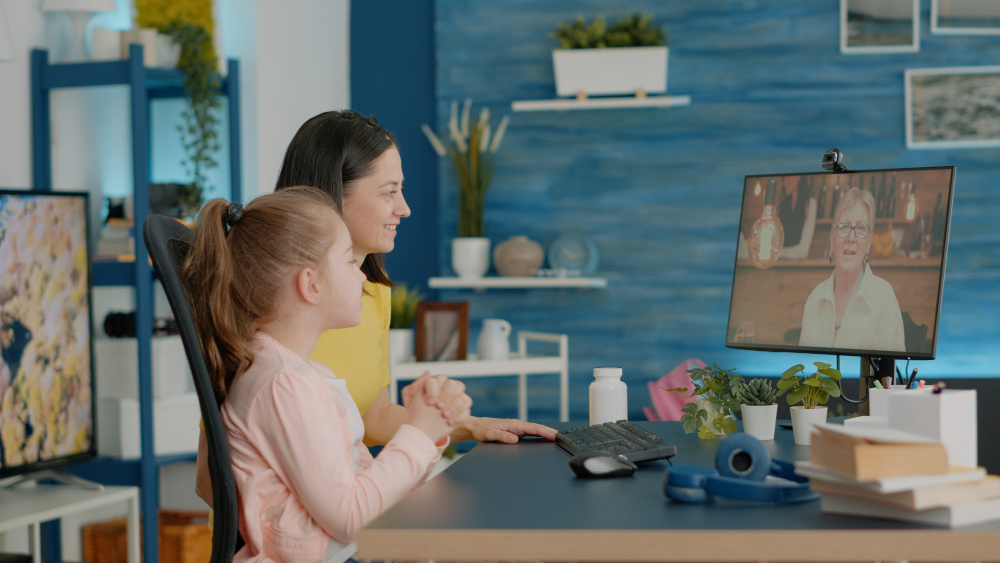
Here are the four most important of those things.
If you look in any classroom where students are really doing well, you will almost always find the same thing: a teacher who knows their students as people, not just as students. These people can tell when a normally lively student has stopped talking. They can tell when stress in the classroom is making it hard to focus. They know which students need to be pushed to do something and which ones need to be reassured before they will try something new.
Emotional intelligence is one of the most useful skills a teacher can have. It means being able to read, understand, and respond to other people's feelings. No matter how well-designed, a virtual learning tool will not be able to do it. An AI system can tell when a student hasn't finished a task, but it can't figure out that they're having a hard week at home and know how to reply with the right amount of kindness and support.
Students learn a lot from being seen and understood by a trusted adult who isn't their parent or a friend. This experience shapes them in ways that go beyond the classroom. Studies constantly show that students are more driven, more adaptable when they face problems, and more likely to stay interested in school over the long term if they feel personally supported by their teachers.
That student who knows why the answer is right and could figure it out again if they had to is not the same as the student who has learned the right answer by heart. The first student knows something.
Employers and colleges in the UAE say that one of the skills that young grads lack the most is critical thinking, which means being able to analyse, question, assess, and reason. It's also one of the hardest things to teach just online. It is possible for algorithms to give knowledge, ask questions, and check replies. What they find hard to do is show how real intellectual study works, which is messy and doesn't always go in a straight line.
This is something a teacher can do in a way that seems real and smooth. As the "devil's advocate," they can start a discussion, push a student to support an unpopular point of view, or just sit with a question that doesn't have a clear answer. They can act unsure, which shows students that solving a tough problem is a process, not an event. They can link a math idea to a choice they have to make in real life or a history event to something that is happening now in the news.
Students remember these times, when a lesson turns into a real talk about how to think, for years to come. These things can happen because a good teacher is present, sensitive, and real.
Remember when you were in school. Most likely, the teacher who made a real difference in your life is not the one who taught you the most facts. That person believed in you even when you didn't. The person who pushed you when you thought you were done, or pushed you to try something you were sure you would fail at. The person whose actions and beliefs showed you what a responsible adult should be like.
That's what mentoring is. And it's something that no virtual learning setting, no matter what, can address.
One of the strongest forces in education is the bond between teacher and student. This is because it is a relationship, one that is built over time, through shared experience, and based on a real human connection. A student who has a teacher as a guide gets more than just help with schoolwork. They are learning how to deal with problems, treat others, fail, and keep going even when things get tough.
It's even more important to have a trusted teacher-mentor in the UAE, where many families raise their kids away from extended family and established community systems. For some students, a committed teacher may be one of the few adults in their life who they can count on as being reliable and important.
Education is more than just learning facts; it's also about learning how to get along with other people. Learn how to argue politely. How to listen to someone who has a different point of view than you do. How to be useful in a group without taking over. How to get help, give comments, and get along with people who have different styles and goals in a room full of them.
These are social skills that you mostly learn by interacting with other people. A good teacher makes this kind of learning possible every day through group activities, classroom talks, projects that students work on together, and handling the inevitable arguments and compromises that come up when people spend time together.
It's not likely to happen any time soon, and most education experts think it shouldn't. AI and digital tools can tailor the way material is delivered, keep track of progress, and give immediate feedback on organised tasks. However, the personal, emotional, and social parts of teaching need a human presence that AI can't really copy.
In a virtual or mixed setting, teachers can connect students with others, act as a guide, and give feedback in real time, which platforms can't do. They look at more than just data points to figure out what students are doing, offer personalised support, set up live talks, and make sure that online learning is educationally useful and not just handy.
Along with topic understanding, you should look for teachers who can relate to students, communicate clearly, are patient, and can change how they teach depending on the student. A teacher who actively gets to know their students, encourages questions, and makes it safe for them to make mistakes is more valuable than one who just gets the information across quickly.
In some ways, yes. This is especially true in mixed models that include live group meetings, group work, and peer talks. It's not a good idea for most students, especially younger kids, to replace all of their face-to-face social interactions with ones that happen online.
GoStudy.ae is meant to work with teachers, not instead of them. Our materials help students get ready for class, review what they've learned, and practice for tests. This makes the time they spend with their teacher more focused and effective. We see ourselves as an extra tool that teachers can use, not as a replacement for them.
Open-ended talk, debate, and guided questioning are all ways to develop critical thinking. To do these things well, you need a skilled teacher who can act quickly and adaptably to what students say and think. Some online platforms try to replicate this by having discussion boards and engaging tasks, but it's hard to copy the fluidity and depth of a real-life talk led by a teacher.
As a central part of its education plan, the UAE Ministry of Education continues to stress the importance of good teachers. The country puts a lot of money into teaching teachers, helping them improve their skills, and getting skilled teachers from all over the world.
When people talk about teaching vs. technology, they are really talking about two different things. It was never really about whether technology could take the place of teachers. Instead, it was always about how technology and teachers could work together to help kids get off to the best start in life.
That human factor is more important than ever in the UAE, where people have high hopes for the next generation and put a lot of money into their schooling. Online tools like the ones pushed by GoStudy.ae can help kids get better tools, learn faster, and practice smarter. But the transformation that happens when a great teacher meets a curious student? That still requires a human being.
Support your child's learning journey with UAE-aligned resources at GoStudy.ae where great teaching and smart technology go hand in hand.