

GoStudy
Author
Nov 4, 2026
Published
7 mins read
Read Time
By the GoStudy.ae academic team · Updated 4 November 2026
Quick answer: UAE schools switched between in-person and distance learning several times in 2026 because of regional tensions. Classes are back on campus for 2026-27, but schools keep contingency plans in case they need to move online again. Parents should do three things now: check for learning gaps (especially in maths, science and exam subjects), close them with a short, focused catch-up plan, and set up a home learning routine so that any future switch to distance learning does not cost more lost weeks.
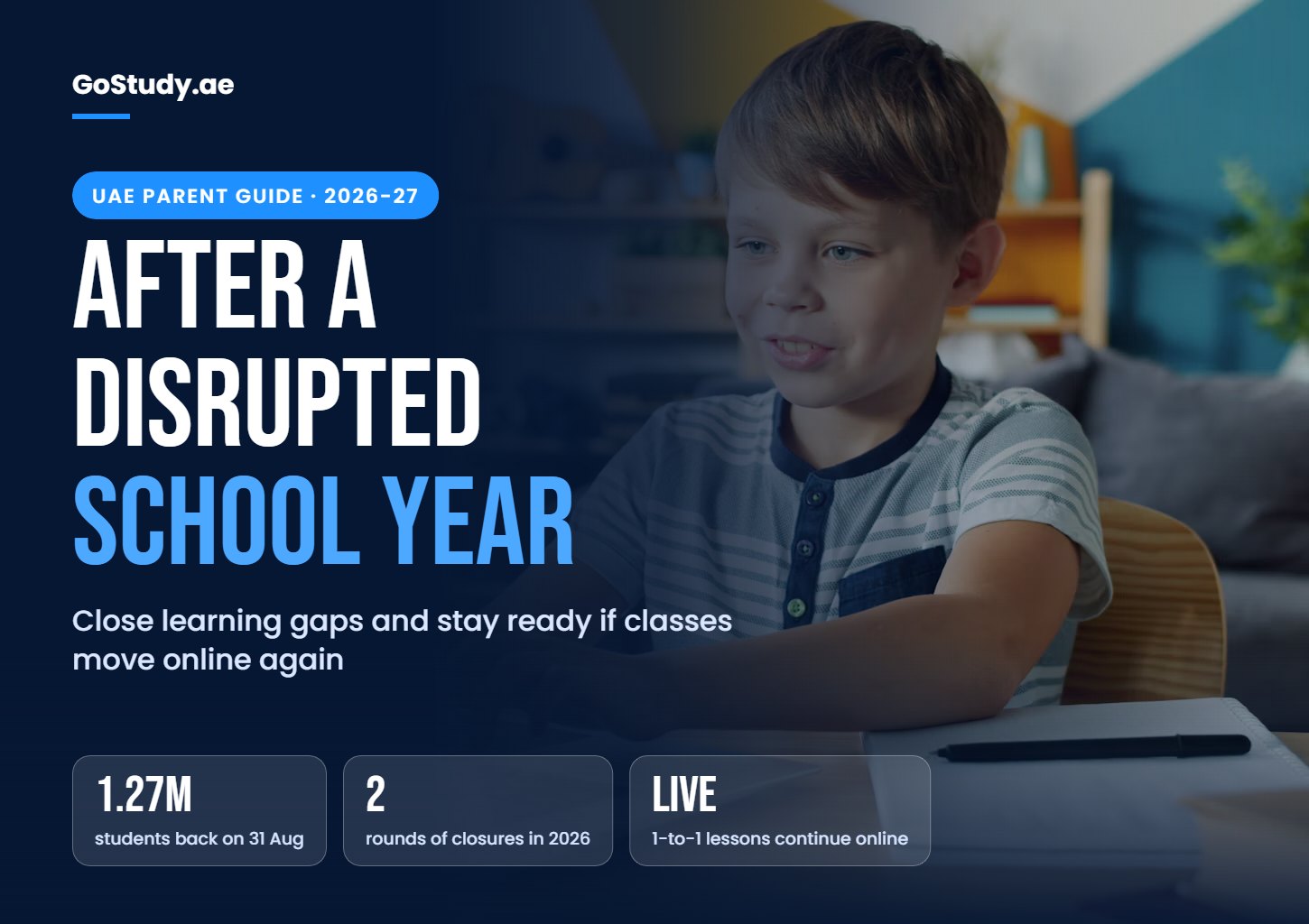
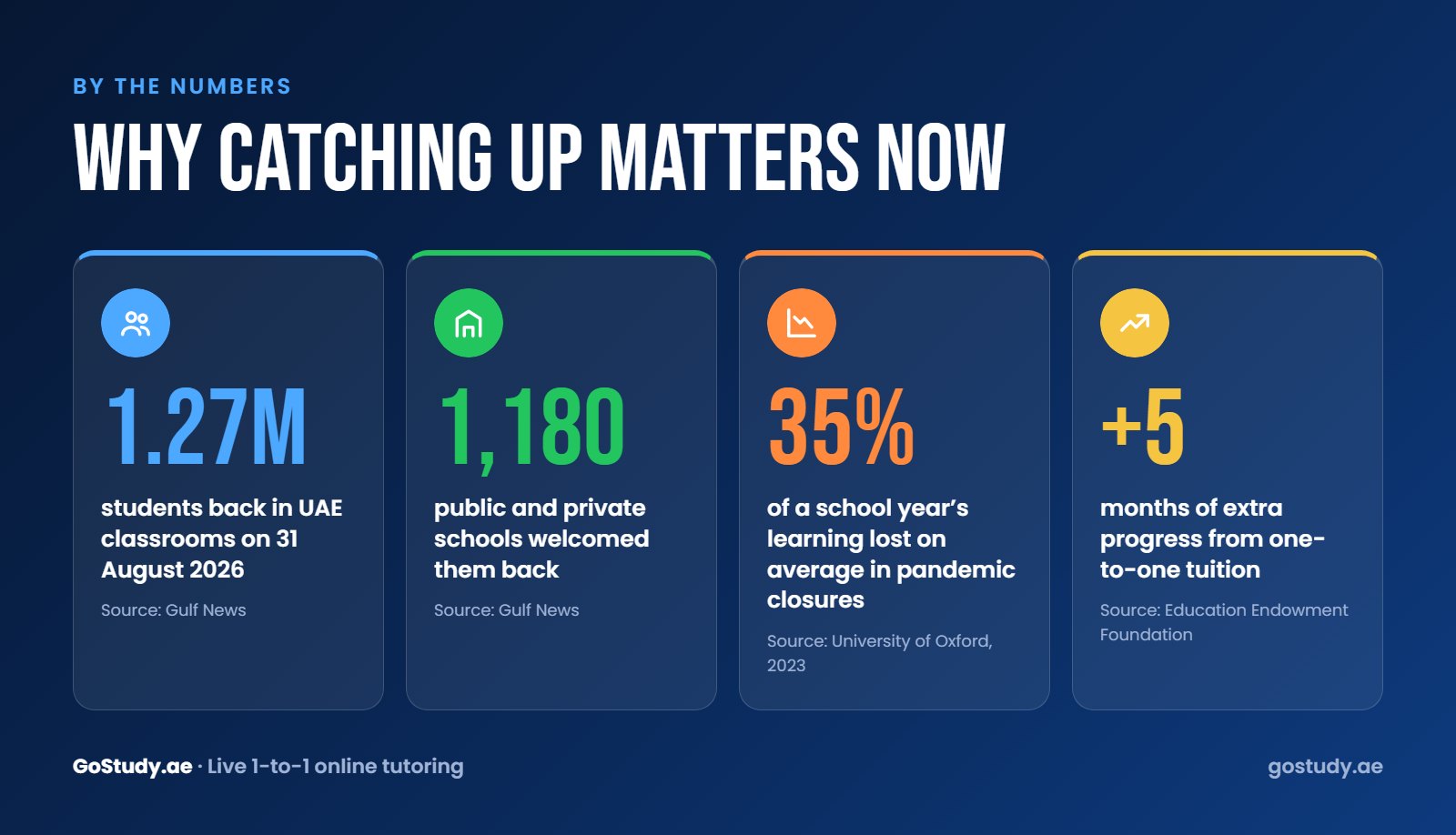
The 2026-27 school year started on 31 August with more than 1.27 million students returning to UAE classrooms. It was described as the first full, uninterrupted return after a year of switching between home and school.
For most families, the hard part is over. But many children finished last year with gaps they don’t yet know they have, and schools are keeping their contingency plans ready. This guide explains what happened, how to spot and fix learning gaps, and how to make sure your child keeps learning whatever happens next.
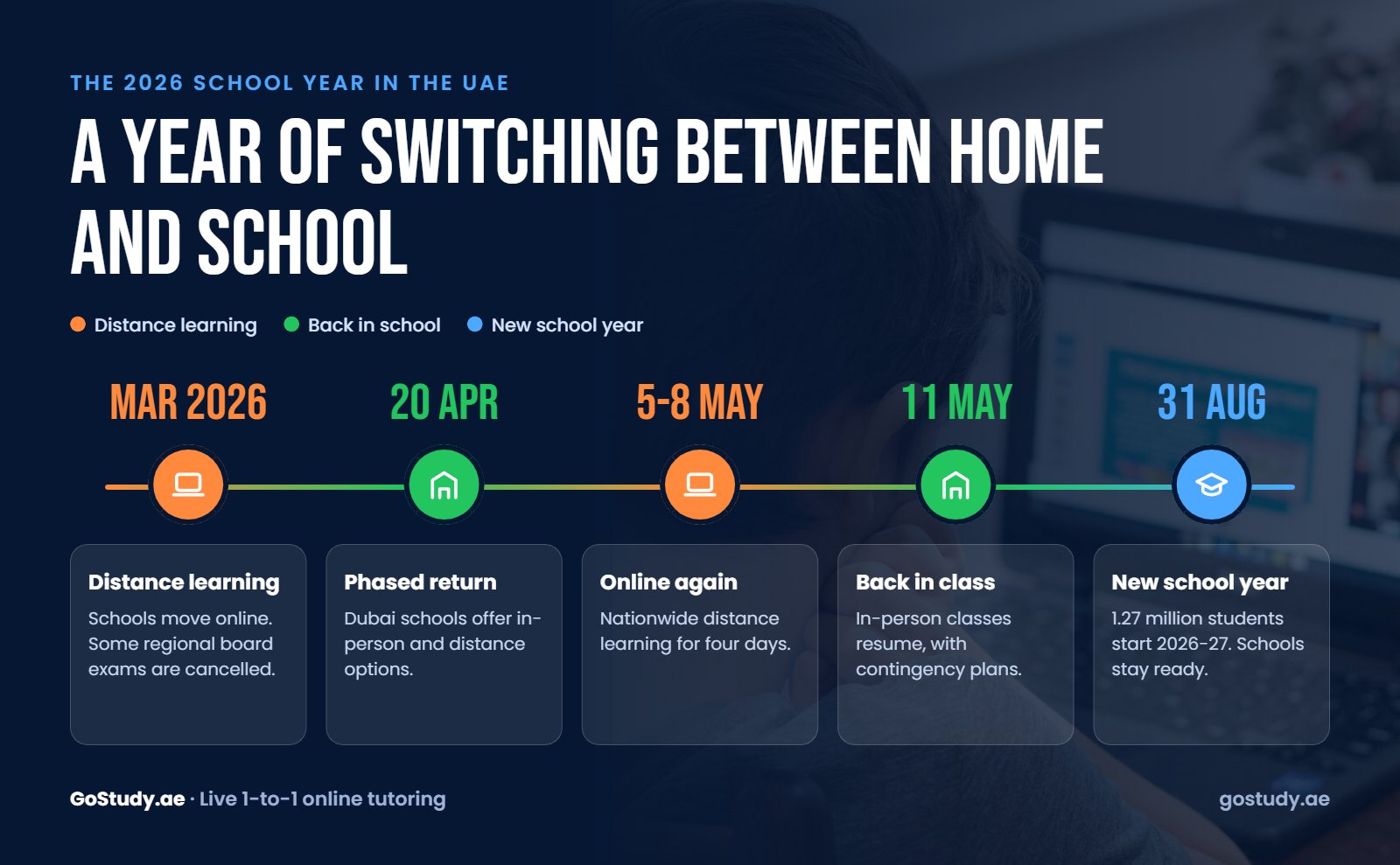
| When | What happened |
|---|---|
| March 2026 | Schools moved to distance learning. MoE-curriculum schools began the third term online, and private schools stayed remote until early April. CBSE cancelled its remaining Class 10 and 12 board exams in the Middle East, and CISCE cancelled ICSE and ISC exams in the region. On 30 March, Indian and Pakistani curriculum schools in Abu Dhabi, Sharjah and the northern emirates opened their new academic year online. |
| April 2026 | From 20 April, schools began a phased return. In Dubai, KHDA said schools must make both in-person and distance learning options available to all students. |
| 5 to 8 May 2026 | Nurseries, schools and universities across the UAE switched to distance learning again for four days. |
| 11 May 2026 | In-person classes resumed, with safety protocols in place and schools ready to switch models if needed. |
| 31 August 2026 | The 2026-27 school year began with a phased start. Schools are keeping last year’s contingency plans. |
A few weeks online may not sound like much. But the disruptions came at important times: the start of a term, the run-up to exams, and, for Indian and Pakistani curriculum schools, the start of a new school year. Some students lost board exams altogether and received grades in other ways.
Research from the pandemic shows how quickly time out of the classroom adds up. A major 2023 review led by the University of Oxford, published in Nature Human Behaviour, found that children lost on average about 35% of a normal school year’s worth of learning, and that the losses were not recovered quickly on their own. The UAE’s 2026 disruptions were much shorter, but the lesson is the same: gaps don’t close by themselves.
Distance learning also suits some children far better than others. Confident, organised students often do well. Younger children, students who find it hard to concentrate at a screen, and those who were already behind usually lose the most.
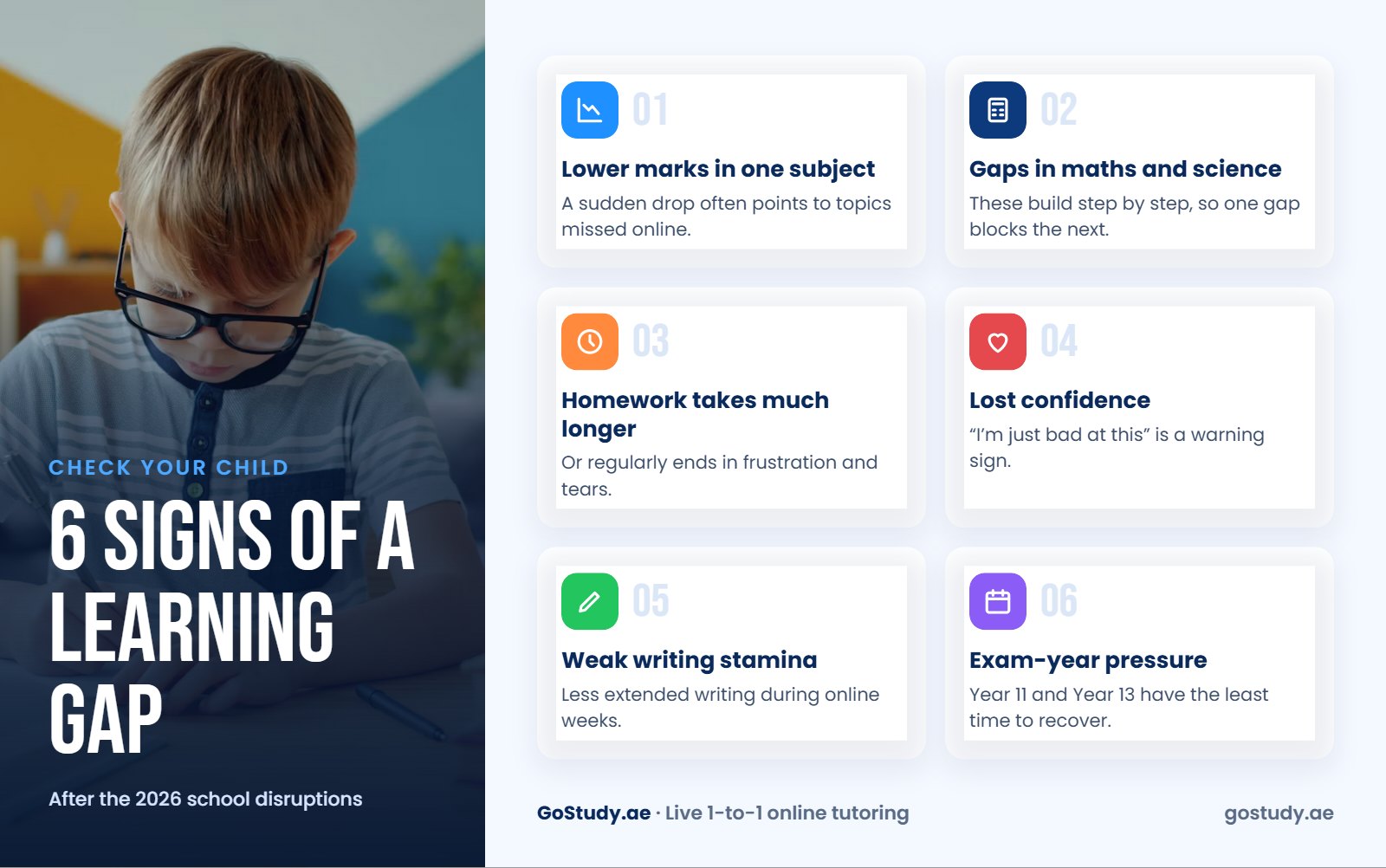
What to do: ask your child’s teacher which topics were taught during the online periods, look at the first assessment results of this year, and ask your child directly which topics feel shaky.
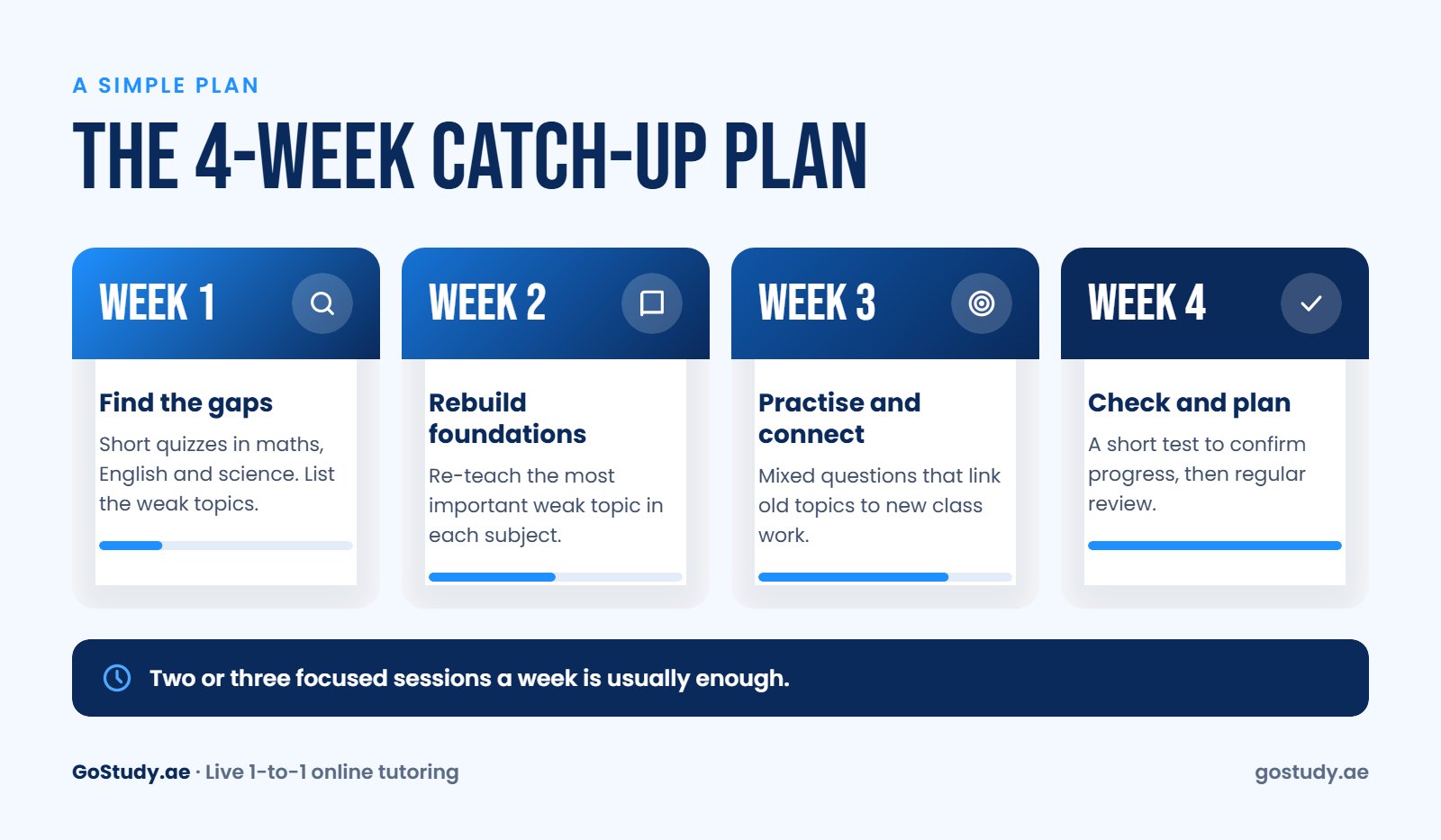
Most gaps can be closed with a short, focused plan rather than months of extra classes.
| Week | Focus | What to do |
|---|---|---|
| Week 1 | Find the gaps | Short diagnostic quizzes in maths, English and science; list the weak topics |
| Week 2 | Rebuild foundations | Re-teach the most important weak topic in each subject, with plenty of practice |
| Week 3 | Practise and connect | Mixed questions that link old topics to what the class is learning now |
| Week 4 | Check and plan | A short test to confirm progress; plan regular review for the rest of the term |
Two or three focused sessions a week are usually enough. For exam-year students, start with the subjects that carry the most weight for their next step.
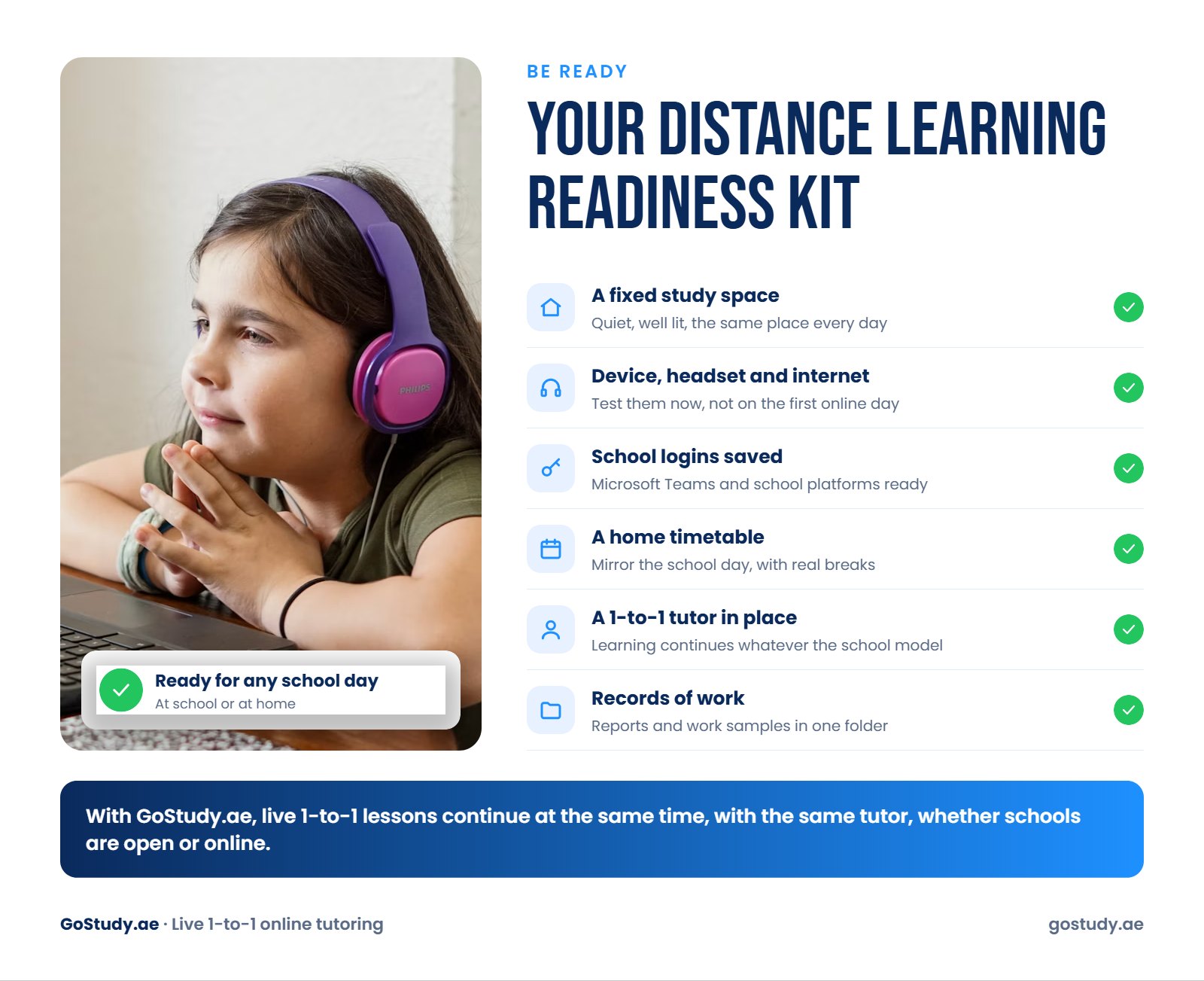
Schools have said they will keep contingency plans in place. If classes ever move online again at short notice, families who are prepared lose far less learning time.
| Area | What to prepare |
|---|---|
| Study space | A quiet, well-lit spot, the same place every day, away from the TV |
| Technology | A laptop or tablet with a camera, a headset with a microphone, and a reliable internet connection |
| Logins | Microsoft Teams and school platform logins saved and tested |
| Routine | A home timetable that mirrors the school day, with real breaks |
| Support | A 1-to-1 tutor in place, so learning continues whatever the school model |
| Records | Reports, assessments and samples of work kept in one folder |
Tips for distance learning days:
Always check the latest guidance from the Ministry of Education, KHDA in Dubai or ADEK in Abu Dhabi.
| Group | Main risk | How to help |
|---|---|---|
| Early years and primary | Reading and number skills fall behind | Daily reading, short number practice, and short live lessons with a parent nearby |
| Middle school | Gaps in maths and science foundations | Find and fix weak topics before they block new ones |
| Exam years (GCSE, IGCSE, A-Level, IB, CBSE) | Missed content and changed exam plans | A clear revision plan and targeted 1-to-1 help in key subjects |
| Students with additional needs | Loss of routine and in-person support | Predictable structure, one consistent tutor and close contact with school |
GoStudy.ae is an online tutoring platform based in Masdar City, Abu Dhabi, chosen by more than 2,000 students. Because every lesson is already online, our teaching carries on exactly the same way whether schools are open or closed.
| What you get | Why it matters now |
|---|---|
| Live 1-to-1 lessons on an interactive whiteboard | Every minute is spent on your child’s own gaps |
| Tutors for every curriculum | British, IB, American, Indian (CBSE) and UAE Ministry of Education, from age 4 to Year 13 |
| Every lesson recorded | Rewatch explanations at any time |
| Parent dashboard with feedback after each lesson | See exactly what was covered and how your child is doing |
| No disruption if schools move online | Lessons continue at the same time with the same tutor |
| Start within 24 to 48 hours | Help arrives quickly |
The evidence supports this kind of help. The Education Endowment Foundation finds that one-to-one tuition adds an average of five months’ additional progress.
Getting started:
Yes. The 2026-27 school year began in person on 31 August 2026. Schools have kept contingency plans in place in case they need to switch to distance learning again.
Not every child did, but many have small gaps, especially in maths, science and writing. Check this year’s first assessment results and ask teachers which topics were taught online.
Most gaps can be closed in four to eight weeks with two or three focused sessions a week. Larger gaps, or exam-year students, may need longer.
It depends on the exam board and the authorities at the time. In 2026, some board exams in the region were cancelled and some assessments moved online. Your school will confirm plans for 2027.
Yes, when lessons are live, 1-to-1 and focused on the child’s specific gaps. Recorded lessons and regular feedback also help parents keep track.
Yes. Tell us the curriculum, year group and topics, and we will match a tutor who teaches to them.
Pay-as-you-go 1-to-1 lessons start at 250 AED per hour for Year 1 to 5 and rise by school year to 550 AED for Year 13. Block bookings save up to 15% per session. See our pricing page.
The best time to close a learning gap is before it grows. Tell us how your child’s year went, and we will suggest a plan and match the right tutor.
Chat with us on WhatsApp · Register in 2 minutes · Call +971 58 534 1673
Written by the GoStudy.ae academic team.